Exactly How Team Treatment Improves Addiction Treatment in Texas
Recovery in Texas hardly ever happens in isolation. We are a state of long drives and longer discussions, towns where everyone understands your people and huge cities where you can disappear if you intend to. Team treatment bridges those globes. It gives structure and skill building, yet it likewise offers something distinctly Texan, a sense of belonging that maintains people coming back. When I consider what in fact moves the needle in addiction treatment, especially in places like San Antonio, the Rio Grande Valley, and the Panhandle, team job sits at the center of the change.
Why team treatment boosts outcomes
Addiction grows in privacy. Team therapy breaks that pattern. The very first time a customer claims, I thought I was the only one that did that, and sees half the area nod, pity loses its grasp. Embarassment drives relapse more than the majority of sets off people name. In a well-led group, peers stabilize the fear and the bad moves, then hold each other to account. That mix, acceptance and liability, is hard to replicate in specific sessions alone.
There is a functional dimension as well. One therapist can collaborate with 8 or 10 individuals simultaneously, which stretches sources without cheapening the work. That matters in rural areas where certified medical professionals are scarce, and it matters in cities where cost, childcare, or job timetables obstruct accessibility. Group therapy aids programs in Texas satisfy a high volume of need while supplying meaningful care.
From years of helping with, I see several consistent advantages. Individuals learn to provide and obtain comments without falling down into defensiveness. They practice real-time coping abilities in a little social atmosphere, then evaluate those skills at home or work. They take in information quicker when it comes from both a medical professional and a peer who has actually attempted the method under pressure. And they develop an assistance network that lasts long after discharge. When the heat index hits 105 in August and tension spikes on a jobsite, having 3 numbers in your phone you can call at lunch can be the difference in between white-knuckling and a positive plan.
The Texas context: location, society, and access
Addiction therapy in Texas is shaped by distance, society, and systems of treatment that vary by county. Someone in San Antonio might have accessibility to multiple healthcare facility systems, the VA, university-affiliated facilities, and loads of recovery community meetings every night. A breeder outside Uvalde or a gear worker in the Permian Container does not. Team treatment comes to be a linchpin for both, simply used differently.
Texas has a huge professional population, heavy in San Antonio. Teams for experts, or mixed groups that skillfully incorporate military society, address ethical injury, hypervigilance, and the limited brotherhood that can make noncombatant therapy feeling clean and sterile. We likewise have bilingual neighborhoods where Spanish-language groups reduce barriers dramatically. When a mother from Laredo can process desires in her first language, consisting of the nuance of family responsibilities, the job reaches her in such a way translations cannot.
Faith is another measurement. Lots of Texans desire space in the group to talk about spiritual resources without really feeling pressed into a doctrine. Skilled facilitators set a tone that invites faith-informed coping while protecting those who do not relate to it. That equilibrium matters.
The legal system likewise converges with treatment often. Medication courts in Bexar Area and various other territories refer people to intensive outpatient programs that depend on group therapy sessions a number of evenings a week. Effectively dealt with, court participation can include structure without transforming the team right into a box-checking exercise.
Where group treatment fits in the continuum of care
Addiction care hardly ever follows a straight line. People relocate through degrees of care based upon clinical demand, risk, and logistics. Team treatment has a function at each stage.
Detox and medically managed withdrawal are mostly medical. Also there, short psychoeducational groups assist people understand what is happening to their bodies and brains. In household programs, day-to-day groups become the backbone of therapy. Customers attend psychoeducation in the early morning, a process group after lunch, possibly a relapse avoidance team before dinner. The intensity offers momentum.
Partial a hospital stay and intensive outpatient care depend greatly on groups. A regular extensive outpatient program in Texas might run 3 nights a week, 3 hours per session, with a mix of skill structure and process time. People function throughout the day, pertained to team, and use what they learn to real stress factors in genuine time. Aftercare groups supply a lighter touch, usually weekly, concentrated on regression prevention, life transitions, and staying connected.
Peer-led meetings enhance, but do not replace, scientific team treatment. Twelve Action fellowships, SMART Recuperation, and faith-based conferences are offered throughout much of the state, with denser options in metros like San Antonio, Austin, Houston, and Dallas. A best technique I recommend is to match a medical team with a minimum of one weekly peer conference. The scientific group gives evidence-based devices and a qualified facilitator. The peer conference broadens the network and adds lived experience.
Common group styles that work
A great program hardly ever supplies simply one type of team. Range satisfies individuals where they are and keeps the job relevant as they stabilize. The following layouts show up frequently in efficient addiction treatment Texas programs:
- Psychoeducational groups that clarify addiction neurobiology, withdrawal timelines, medicine options, and the mechanics of craving and reward.
- Skills teams that instruct concrete devices such as desire surfing, managing high-risk circumstances, and communication methods for limit setting at the office and home.
- Process teams where members discuss current struggles, provide and receive responses, and practice susceptability with clear ground rules.
- Relapse avoidance teams that map triggers, build split plans, and rehearse what to do after a slip so one beverage or one pill does not turn into a complete return to use.
- Family or companions groups that orient enjoyed ones, educate helpful reactions, and align expectations about personal privacy, safety, and accountability.
In bigger facilities, you will additionally see trauma-informed teams, grief work, drug support system for those on buprenorphine or naltrexone, and customized groups for teenagers, experts, or very first responders.
What in fact takes place in the room
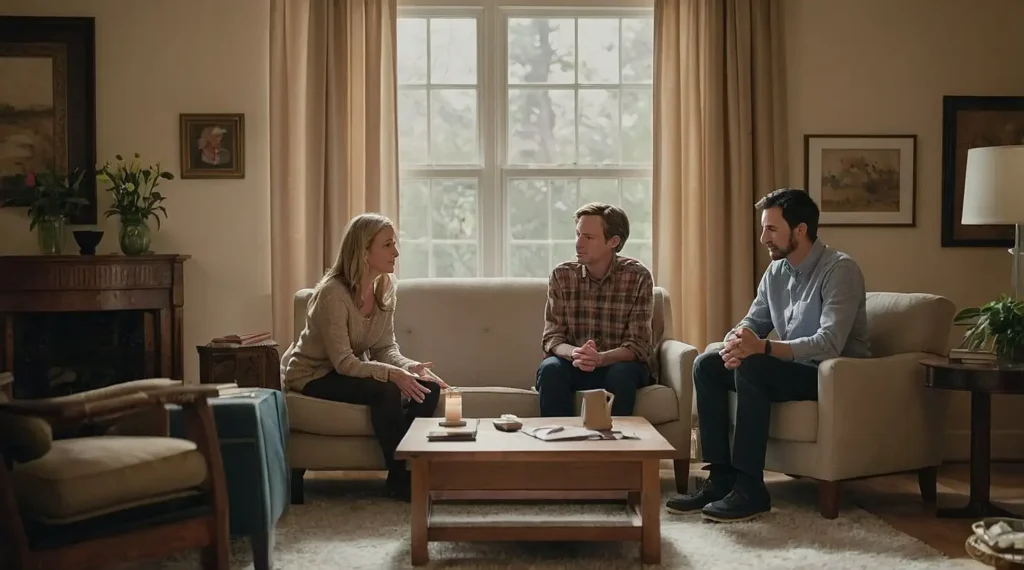
People who have not been in group treatment in some cases visualize confessionals or talks. Fact is more organized and much more practical. The facilitator establishes standards on day one: discretion, regard, no crosstalk unless invited, speak from your own experience, and no compounds aboard. In early recuperation teams, a fast security check-in opens the session. Name, sobriety date if appropriate, one win, one obstacle, one objective for the week. That 5 minute rhythm sets a tempo and offers the facilitator a read on risk.
From there, a common procedure segment may begin with somebody describing a near-miss on the way to H‑E‑B when a beer display screen captured them off guard. One more participant enters with an instance from recently at a Spurs game. The facilitator overviews them to identify thoughts, body sensations, and the selection factors where a various action was feasible. The goal is not to dwell in the story, it is to practice the ability, occasionally right there in the room with a quick duty play.
Anecdotes aid ground this. A customer I will call Luis was a 31 year old welder southern Side of San Antonio, functioning ten hour shifts, drinking hard on weekends then on weeknights. What shifted for him in group was not a lecture concerning dopamine. It was when another member said, I put water in my tool kit and consume it like a beer on the last hour of change so my hands learn a new routine. That simple technique, plus a strategy to call a peer before he turned onto his road, obtained him with the witching hour for 3 straight weeks. Person treatment refined his plan and worked the much deeper despair. The group maintained him honest.
Facilitator judgment and handling tough dynamics
Groups are living systems. They breathe, they delay, they in some cases go sidewards. Skilled facilitators check out the area like a seasoned registered nurse checks out a set of vitals. If someone dominates, the leader teaches concise sharing and transforms to quieter members with an invitation that does not really feel like a spotlight. If two participants drift into guidance offering, the leader reroutes to curiosity and impact language. Cross‑talk, side conversations, and humor that cuts instead of attaches all require quick, tranquil adjustment. Texas humor can be sharp. The line in between relief and ridicule matters.
Romance inside a group can thwart recovery faster than a poor day at the workplace. Most programs establish a clear limit: no dating or sex-related partnerships in between current group members. Applying it without shaming calls for a steady hand. When a bond kinds, the leader may separate timetables, move somebody to a different track, or address it honestly as component of relapse prevention.
Cultural humbleness is not optional. In blended language teams, the facilitator look for understanding, not by asking, Do you comprehend, yet by welcoming a participant to sum up an ability in their own words. With experts, the leader learns not to pathologize hypervigilance, and instead structures it as a stamina that requires channeling. With oilfield timetables, the leader acknowledges uneven rests and strategies coping around evening shifts.
Pairing team treatment with medicine and specific work
Group treatment does not change medical care. For opioid use problem, buprenorphine or methadone decrease death and make it possible for people to engage in treatment. For alcohol use condition, naltrexone, acamprosate, or disulfiram each have functions. In practice, one of the most sturdy healings I see use medication when shown, a weekly individual session to handle exclusive injury or complicated choice production, and two or 3 team sessions to exercise abilities with peers. That triangle holds.
It is additionally https://elliottsppr465.vantagequill.com/posts/addiction-treatment-in-san-antonio-for-veterans-specialized-support-and-treatment where relapse, or the smaller sized slip that terrifies somebody right, obtains handled promptly. In a well-run group, a member can state, I used Saturday, and not be thrown out. The leader aids the team respond constructively. What did you find out. Who did you call. What part of the strategy held. What part stopped working. Then a concrete next action, possibly an added check-in or a medicine review. Permissions enter play when security or sincerity break, not when a person tells the truth concerning a gap and recommits.
Measuring development without turning teams right into spreadsheets
Programs needs to track end results, however metrics can squash the human tale. One of the most helpful indications I view in team are engagement high quality, not simply participation. Are participants offering certain, considerate comments. Do they attach outdoors group for sober tasks. Are goals moving from vague to measurable. Over 8 to twelve weeks, most individuals show enhanced rest, fewer dilemma calls, and much more steady relationships. Desire strength commonly drops from daily spikes to orient, convenient waves a pair times a week. If none of that is taking place by week four, I revisit degree of care, drugs, or co-occurring problems like neglected ADHD or state of mind disorders.
Telehealth groups in a state this large
Texas size transforms telehealth from uniqueness to necessity. I have led night groups that consist of an educator in Laredo, a nurse in Kerrville, and a vehicle mechanic logging in from a break room outside Waco. Telehealth broadens accessibility, but it needs tighter guideline. Cameras on, exclusive room, no driving, and a prepare for what occurs if a person detaches mid situation. Facilitators additionally discover to review microexpressions and long stops, then check in straight when energy drops.
Insurance insurance coverage for telehealth group treatment enhanced during the pandemic and has remained more positive considering that, though policy details differ by plan. Numerous industrial strategies in Texas cover intensive outpatient telehealth if particular standards are satisfied. Medicaid coverage for material use services exists yet can be restricted by area and company schedule. For individuals without protection, some nonprofits and county-funded programs supply moving scale or no cost teams. The Texas Health And Wellness and Human Providers Payment preserves directories that aid, though accessibility fluctuates.
San Antonio specifics: toughness to leverage
Addiction therapy in San Antonio benefits from a few special possessions. The VA existence is solid, with integrated psychological health and wellness and compound make use of groups that run evidence-based groups. The city organizes a durable network of healing area companies that give peer support, work mentoring, and evening teams in both English and Spanish. Bexar County's specialty courts coordinate with companies and usage teams as a central intervention, not a penalty. Since San Antonio straddles army culture, deep family networks, and a growing technology field, facilitators learn to change equipments smoothly. You can have, in the exact same circle, a retired master sergeant, a college student from UTSA, and a grandmother elevating grandchildren. The shared language of food cravings, boundaries, and really hope connects them more than their distinctions split them.
If you are looking for addiction treatment in San Antonio, group accessibility is rich. But richness can overwhelm. Take note of the quality of assistance, not simply the number of sessions. A jam-packed routine led by burned out staff is much less efficient than a moderate lots led by medical professionals that remember your objectives and follow through when you miss.
Choosing the right team program in Texas
A couple of targeted concerns will tell you a great deal concerning program quality and fit:
- How are teams structured throughout degrees of care, and just how do you choose which track someone enters.
- What training do your team facilitators have in addiction, injury, and de-escalation.
- How do you deal with slips or relapses revealed in team, and what is your policy on privacy breaches.
- Do you use night or telehealth groups for individuals who function shifts, and exist Spanish-language options.
- How do you incorporate medication treatment with group therapy, and can I keep my outside prescriber if I have actually one.
If the answers are obscure, or if staff seem frustrated by the concerns, maintain looking. The most effective programs welcome educated clients and families.
Cost, insurance, and sensible barriers
Even strong motivation can not defeat a shut budget. Commercial insurance policy will typically cover team treatment as part of extensive outpatient or partial hospitalization if standards are fulfilled. Deductibles and copays still attack. Some employers in Texas deal Employee Assistance Programs that cover a short collection of sessions, occasionally consisting of teams. For those uninsured or underinsured, area resources and nonprofits can aid, especially in large counties. Smaller or country areas may have fewer alternatives, which is where telehealth and peer-led community groups fill gaps.
Transportation and child care sink many good purposes. Programs that understand Texas truths companion with rideshare coupons, coordinate with probation schedules, and offer child-friendly hours. I have actually enjoyed participation double when a program moves one track from 5 pm to 7 pm to accommodate construction workers. Relatively tiny logistics can make or break adherence.
Potential downsides and exactly how to reduce them
Group treatment is not a magic bullet. Social anxiety can surge in the beginning. Some individuals with complex injury locate large groups dysregulating. A mismatch in group structure can derail great. I have seen a young mom feel separated in a team loaded with middle-aged men that bonded around sporting activities and job tales. The fix was not to nix team treatment. It was to move her into a mixed-age, mixed-gender group with various other caretakers and to match her with a specific specialist to procedure trauma.
Confidentiality concerns are genuine, particularly in tight-knit communities. Programs must set clear effects for violations and design liability when they happen. The majority of violations are thoughtless, not destructive, and an honest discussion in the space can restore depend on. Repeat transgressors require to be gotten rid of for the security of the group.
Finally, groups can drift into chronic airing vent. That often shows leader fatigue or uncertain objectives. Resetting framework, reestablishing ability method, and revolving roles like timekeeper or check-in leader can re-energize a stationary group.
How providers dressmaker groups to Texas work rhythms
Texas work patterns challenge common treatment routines. Oilfield turnings, hospital changes, long-haul trucking, and seasonal construction placed people out of step with nine to five treatment. Good programs map local sectors and timetable appropriately. In San Antonio, that may indicate early morning teams for hospital staff, with night options for service market workers. Near refineries, programs could offer compressed weekend break intensives that still meet evidence-based hour minimums. In agriculture-heavy areas, harvest period timetables require flexibility.
Technology helps. Asynchronous discovering modules do not change real-time groups, yet they reinforce skills when a person misses out on a day. Text-based accountability strings, moderated by a clinician, provide everyday touch factors without overwhelming staff.
The function of graduates and healing community
One marker of a healthy program is what occurs after discharge. Alumni groups that satisfy weekly or monthly maintain people linked to a supportive identification. I have actually seen participants go back to share one difficult lesson they found out in the last year: the very first holiday, the initial household wedding, the first birthday party without a drink. Those tales educate more recent participants what to anticipate and exactly how to prepare. In Texas, where neighborhood bonds run deep, graduates networks usually prolong into task references, sober leisure, and casual mentorships that bring more weight than any brochure.
Recovery area companies enhance that impact. They host skills workshops, return to aid, and, most importantly, gatherings that are really enjoyable. A Saturday morning walking at Eisenhower Park, a bbq where the brisket is the star and the coolers teem with carbonated water, a Spurs watch event where the loudest cheer is for somebody's 6 month chip. Delight is a regression avoidance ability. Groups can and must make space for it.
What success looks like from the facilitator's chair
When team treatment is functioning, you see useful modifications. Individuals begin showing up promptly, with a note pad. They call each various other out kindly when tales drift right into battle stories. They set certain, uninteresting objectives that change lives, like putting cash in envelopes so payday does not vanish by Tuesday, or telling a bro, I will not keep beer in your house anymore. Language shifts from always and never ever to often and next time. Crises still take place. Yet the recuperate is much faster, and seclusion sheds its foothold.

I consider a dad in his forties from the West Side that had actually cycled through two property stays. In an intensive outpatient team, he dedicated to chair a peer conference when a week and to message two group participants every early morning. The first text took 10 secs. Six months later on, he said, The group kept me inside eviction enough time for the rest to stick. It was not magic. It was consistency, ability technique, and people who understood his children' names.
Bringing it together
Addiction therapy, at its finest, integrates scientific research and community. In Texas, group therapy is the area where those meet. It appreciates the range of our state and the particularities of our individuals. It extends limited resources without reducing care to a lecture. It asks clients to step into susceptability, after that reveals them they can do tough points with others seeing and applauding. Whether you are weighing addiction treatment in San Antonio, browsing court demands in Bexar County, or visiting from a ranch residence 2 areas over, a well-run group can secure your recovery.
The suggestions I provide families and clients is simple. Search for programs that invest in their group facilitators, shield the container of the room, and adapt to Texas truths. Ask hard inquiries. Sit in on a session if the program enables observers for positioning. Take note of exactly how you feel leaving the space. Hopeful and tested is a great indication. Drained pipes and puzzled is not.
Group therapy will not resolve every little thing. Yet in a state as large and varied as ours, it typically does one of the most crucial work: transforming I into we, and we right into a plan that holds when life attempts to knock it loose.